
Former Haryana Chief Minister Bhupinder Singh Hooda has criticised the newly introduced fees on UPI payments, stating they will lead to increased inflation for the common man. He dismissed government claims that customers would not be burdened, arguing that merchants would pass on the costs. Hooda demanded the immediate withdrawal of these fees, highlighting that the government's move contradicts its 'Digital India' initiative.

The Qualified Institutional Buyers (QIBs) portion of the Jio Platforms IPO was fully subscribed at over 2x demand within minutes of its issue opening on Wednesday, indicating strong institutional interest in India's largest public issue.

Tata Sons Chairman N Chandrasekaran views the group's investment in semiconductors not as a short-term financial play, but as a critical long-term commitment to India's growth and self-reliance in a sector vital for domestic consumption and global supply chains.

Jio Platforms' initial public offering has garnered an overwhelming institutional demand of approximately Rs 2.5 lakh crore, significantly exceeding its Rs 8,110-crore anchor book, with global and domestic investors vying for a stake in the Reliance Industries subsidiary.

Dedicated Ayush dispensaries increased from 26,130 in 2013-2014 to 37,804 in 2024-2025, while hospitals rose much more slowly, from 3,605 to 3,885.
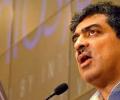
Nandan Nilekani, co-founder of Infosys, has urged for the expanded adoption of the Account Aggregator (AA) framework to facilitate formal credit access for self-employed individuals and gig workers. He highlighted its potential to enable cash-flow-based lending by leveraging diverse data streams, moving beyond traditional asset-based lending, and fostering a more inclusive digital financial infrastructure in India.

Atomic Energy Commission chairman Ajit Kumar Mohanty stated that India is on the verge of a significant technological transformation, driven by advancements in AI, quantum technologies, and other fields. Speaking at BIT Mesra's convocation, he emphasised the need for strong indigenous capabilities, skilled professionals, and interdisciplinary collaboration to achieve a developed India. Other speakers, including BIT Mesra's Chancellor and Vice Chancellor, echoed the importance of continuous learning and contributing to national progress.
Isha Ambani, a director on the board of Jio Platforms, revealed that a failed attempt to upload a college assignment in 2009-10 due to poor internet connectivity in Mumbai sparked the idea and subsequent conversations that led to the creation of Jio.

Union Health Secretary Punya Salila Srivastava highlighted the strong health cooperation within BRICS, emphasising the critical role of digital health and artificial intelligence in ensuring continuity of care. Speaking at the 16th BRICS Health Ministers' meeting, she noted shared challenges among member nations and showcased India's advancements in digital health infrastructure and AI strategy.

J R D Tata, chairman of the Tata group from 1938 to 1991, said that whenever he had to make a difficult decision, he would ask himself, what will be good for India, and what will be good for the Tatas. If he had a doubt, he would decide in favour of India. In the long run, it would turn out well for the Tatas too, he said, points out Arun Maira.

Jio Platforms Ltd's (JPL) public offer, valued at Rs 30,213 crore, was fully subscribed within 100 minutes of opening, making it the fastest-ever subscribed IPO in India, driven by strong institutional demand.

Trade and business associations across India are organising a 'No UPI Day' on October 2 to protest the upcoming 0.4 per cent merchant discount rate (MDR) on Unified Payments Interface (UPI) transactions exceeding 2,000, effective from October 15.

Prime Minister Narendra Modi has urged for a global framework to combat cross-border cyber frauds and deepfakes, highlighting the need for governments, tech companies, telecom operators, and financial institutions to collaborate. Speaking at the India Mobile Congress 2026, Modi stressed that technology thrives on trust and that India is ready to share its expertise in tackling cyber threats. He also noted the rapid expansion of 5G and the success of digital governance initiatives like Direct Benefit Transfer.
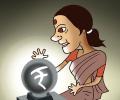
RBI Governor Sanjay Malhotra stated it is "premature" to discuss the implementation of Merchant Discount Rate (MDR) for digital payments, advising a "wait-and-watch" approach. He emphasised that investment in public payment infrastructure is necessary and someone must bear the cost, whether through taxes or MDR. The government is currently working on amendments to relevant statutes, and the RBI is focused on strengthening this infrastructure.

Queen Maxima of the Netherlands, the UN Secretary-General's Special Advocate for Financial Health, visited Mumbai to understand India's digital public infrastructure, including UPI and AI, in improving financial health for salaried individuals. She interacted with healthcare professionals and SalarySe leaders, praising India's advancements in financial inclusion and technology's role in empowering individuals.

The All India Tennis Association (AITA) has launched a new digital platform in partnership with World Tennis Number, creating a unified ecosystem for Indian tennis. This platform will streamline registrations, tournament entries, and provide access to rankings, aiming to modernise the sport's administration and player experience.

The Indian men's volleyball team secured its third consecutive victory at the Asian Games, defeating Qatar 3-2 in a hard-fought match to qualify for the quarterfinals. The team showed remarkable resilience, coming back from two sets down in a marathon encounter.

Whether you're politically active or simply an everyday internet user, these are ten digital traps worth understanding.

The Indian Super League (ISL) has partnered with YouTube to stream all 163 matches live and free for the 2026-27 season, aiming to expand its digital reach and remove subscription barriers.

Apple Pay is now available in India. Here's how you can add an eligible credit card to Apple Wallet and make payments using your iPhone.

IT Minister Ashwini Vaishnaw announced that the Indian government will release a consultation paper on AI regulations within a month. This framework will address critical aspects like AI safety, deepfakes, and a human-first approach, emphasising the industry's primary responsibility in ensuring safe AI deployment. The move comes amidst growing global concerns over AI risks and the need for robust safeguards.

Airtel Business CEO Sharat Sinha stated that evolving architecture and methodologies for safely deploying Artificial Intelligence, coupled with adequate guardrails, are essential to unlock productivity gains. He welcomed the government's upcoming consultation paper on AI regulation, focusing on safety, deepfakes, and a human-first approach. Sinha also highlighted AI's role in driving demand for digital infrastructure and Airtel's growth in cybersecurity and fraud prevention.

The Indian government has officially declared the Pakistan-based Shahzad Bhatti Network (SBN) a terrorist organisation under the Unlawful Activities (Prevention) Act (UAPA). This action, announced by Union Home Minister Amit Shah, targets a group involved in cross-border smuggling of arms, explosives, and narcotics, as well as inciting youth into terrorism and spreading hateful digital content. SBN is accused of threatening India's democratic structure, communal harmony, and internal security.

India has achieved its highest-ever annual Foreign Direct Investment (FDI) inflow of USD 94.53 billion in FY 2025-26, with cumulative FDI reaching USD 843 billion since 2014-15, announced Commerce and Industry Minister Piyush Goyal. Production Linked Incentive (PLI) schemes have also significantly boosted investment, production, exports, and job creation.

Left parties have strongly condemned the government's decision to impose charges on UPI payments exceeding Rs 2,000, with CPI General Secretary D Raja alleging the move was made under "US pressure" to favour foreign payment companies. Both CPI and All India Forward Bloc demand the withdrawal of this "anti-people decision," arguing it burdens consumers and merchants while undermining UPI's role as a public digital infrastructure. They highlight concerns that the charges weaken India's digital sovereignty and serve commercial interests of foreign corporations like Visa and Mastercard.
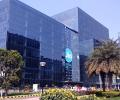
Jio Platforms' upcoming initial public offering (IPO) is anticipated to be India's largest to date, potentially listing among the top three stocks with a valuation of around Rs 12 lakh crore, and is expected to proceed without an offer-for-sale as current investors show no interest in diluting their holdings.

The first five matches of the Indian Super League 2026-27 season have garnered significant viewership on YouTube, with 65 million views and 52 million viewers. The opening week also saw high concurrent viewership, particularly for the Inter Kashi versus Kerala Blasters FC match, and strong engagement across both English and Hindi feeds, underscoring the league's growing digital presence and the importance of multilingual content.

Canadian billionaire Prem Watsa's Fairfax Financial Holdings will utilise the expertise of Deepak Parekh and Paresh Sukthankar, former HDFC leaders, as it moves to acquire a 60.72 per cent stake in IDBI Bank for 52,878 crore, with N S Kannan proposed as chairman.

The CEO of the National Health Authority, Sunil Kumar Barnwal, highlighted BRICS nations' shared aspiration for connected, patient-centric, and resilient healthcare systems through digital health infrastructure and responsible AI. Discussions at the 16th BRICS Health Ministers' meeting focused on overcoming challenges like limited interoperability and workforce constraints, with countries like Brazil and Indonesia sharing successful digital health initiatives.

Anup Bagchi, the incoming MD & CEO of HDFC Bank, is set to become India's highest-paid bank CEO with a proposed target annual compensation package of approximately 35.9 crore, including a significant variable pay component and a one-time joining bonus.
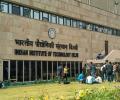
Researchers at IIT Delhi have successfully designed India's first working indigenous micro Graphics Processing Unit (GPU). This significant development aims to reduce the country's reliance on imported GPUs, which are crucial for AI, Machine Learning, and various embedded applications, and could help bridge the digital divide.

For India, the goal is not simply to host another grand diplomatic gathering. It is to prove that a diverse coalition of emerging powers can still deliver.

Union Communications Minister Jyotiraditya Scindia announced India's ambition to lead the world in 6G mobile technology and become a designer of global technology standards. Speaking at the Global Fintech Fest 2026, Scindia highlighted India's shift from being a technology market to a technology maker, emphasizing progress in 5G rollout, affordable data, and digital infrastructure driving fintech growth, while also stressing the importance of digital security.

Jio Platforms Ltd's Rs 30,213-crore initial public offering (IPO) achieved full subscription within 100 minutes of opening, making it the fastest among India's mega issues, surpassing previous records set by companies like Reliance Power.
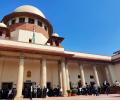
The Supreme Court has made permanent its order protecting a journalist from coercive action in a road rage case and quashed a police notice to 'X' seeking his digital details. The court noted the police sought data from before the alleged crime and granted the journalist liberty to challenge the FIR and seek guidelines for data collection.
Gaganyaan astronaut Prasanth Balakrishnan Nair stressed the critical importance of AI sovereignty for national cybersecurity, citing the increasing difficulty in distinguishing between real and fake content due to AI. Speaking at the Kerala Cyber Suraksha Summit, Nair highlighted that future conflicts and industries would involve a 'whole-of-nation approach,' blurring physical and digital boundaries. He urged greater awareness of digital threats and emphasised India's need to build on its technological capabilities in AI and cybersecurity, drawing parallels with the success of Chandrayaan-3. Other speakers also underscored the rising threat of cyberattacks and the potential for Kerala to contribute to national technology requirements.

A new digital political phenomenon, the 'E20 Janta Party', is gaining traction on Instagram, mobilising Gen Z against the government's mandatory 20% ethanol-blended petrol (E20) and demanding Union Minister Nitin Gadkari's resignation.

A dozen companies, including major players like Jio Platforms and Zetwerk Manufacturing Business, are poised to launch Initial Public Offerings (IPOs) in October, continuing India's strong fundraising momentum in the primary market. These offerings span diverse sectors, reflecting sustained investor interest in businesses with robust growth prospects.

Apple has removed the offline messaging app Bitchat from its India App Store following a demand from the Ministry of Electronics and Information Technology (MeitY). Developed by Jack Dorsey, Bitchat faced scrutiny under Section 69(A) of the IT Act, 2000, due to concerns about its potential misuse by anti-national elements and for evading lawful surveillance, especially during public disorder. This marks the second time the app has faced government action in India.

Reliance Industries Ltd (RIL) has publicly welcomed competition from Elon Musk's Starlink in the satellite communications sector, asserting that all players, including Jio, must abide by Indian laws and policies.
